

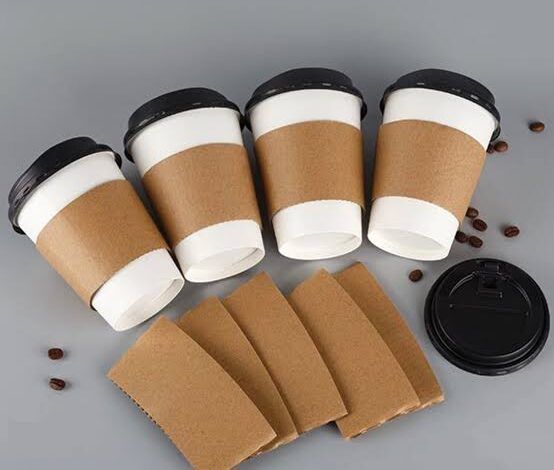
Pappedeckel is a regional German word linked to cardboard, paperboard, and objects made from thick paper material. At first glance, it seems easy to translate. Pappe means cardboard, while Deckel usually means a lid or cover. But everyday German is not always that literal. Depending on the region and sentence, the word may mean a cardboard lid, a piece of stiff board, or simply cardboard itself.
The more standard spelling is Pappendeckel. Dictionaries also record the shorter form Pappdeckel. Regional speech can change the sound and spelling even more, which helps explain forms such as Pappedeckel and Babbedeckel. German dialects often keep words alive in forms that look strange to people who learned only standard German.
So this is more than a word for a cheap piece of cardboard. It is a good example of how German changes from one town or region to another.
What Does Pappedeckel Mean?
The safest English meaning is cardboard, paperboard, or a piece of cardboard.
Langenscheidt translates the standard German word Pappendeckel with terms such as cardboard, millboard, paperboard, and pasteboard. Cambridge also defines Pappe as a firm material made from layers of paper, which is normally translated as cardboard.
A direct breakdown gives us two parts:
Pappe = cardboard
Deckel = lid or cover
That makes “cardboard lid” a fair literal translation. But it should not be treated as the only meaning.
Imagine someone asking for a piece of stiff board to place under an object. Calling that item a Pappendeckel would not mean that it must be the lid of a box. The word can refer to the material or a flat piece made from it.
Context matters.
Pappedeckel vs. Pappendeckel
This spelling issue causes much of the confusion.
Pappendeckel is the recognized dictionary form. Duden lists the word in standard German, while Wiktionary records Pappdeckel as a related form. Collins also treats Pappendeckel as a masculine German noun and notes its connection with Pappdeckel.
Pappedeckel, without the second “n,” is more likely to appear when regional pronunciation is written down as it sounds.
That is common with dialect.
Spoken German does not follow one sound pattern across the country. A person from Bavaria may pronounce a word differently from someone in Hamburg. Speakers in Swabia, Austria, Franconia, or the Rhineland may change consonants, endings, or whole syllables.
As a result, searching online for only one spelling can give an incomplete picture.
Why Babbedeckel Appears in German Dialects
Another form sometimes seen is Babbedeckel, along with spellings such as Babbadeckel or Babbadeggl.
The change from a hard “p” sound toward a “b” sound reflects regional pronunciation. Dialect words often have no single agreed spelling because people first learn them through speech rather than books.
This is especially important when German dialect is written online. Two people may say almost the same word but spell it in different ways.
Modern linguistic research still treats Bavarian, Franconian, and Alemannic as distinct German dialect groups with clear differences from standard German speech.
So Pappedeckel and Babbedeckel should not automatically be treated as unrelated words.
They can be regional versions built around the same basic idea.
Is Pappedeckel Really a Cardboard Lid?
Sometimes. But not always.
The word Deckel creates the biggest trap for English speakers. Its basic meaning points toward a lid or cover. That leads to the natural translation “cardboard lid.”
If the object is actually closing a container, this translation works well.
For example, a paperboard top placed over a package could reasonably be described that way.
But German dictionary use is broader. Langenscheidt gives translations tied to cardboard and paperboard, rather than limiting the word to a literal lid. A dictionary entry based on German usage also describes it as stiff cardboard or a piece of firm board.
That difference is important.
A word can start with a literal image and gain a wider everyday meaning over time. German is full of compound words that work this way.
What Is Pappedeckel Made From?
In practical terms, Pappedeckel refers to material made from thick or stiff paper fibers.
The broad German word Pappe describes a relatively firm paper-based material. Cambridge notes that it is formed from several layers of paper and translates it as cardboard.
In English, several words may be used depending on the product.
Cardboard is the broad everyday term. Paperboard is often used for thinner but firm packaging stock. Pasteboard and millboard describe more specific forms of compressed or layered board.
Most people do not make those technical distinctions in normal conversation.
If a German speaker points at a stiff gray sheet and calls it Pappe, “cardboard” will usually tell you enough.
The exact material may differ in thickness, finish, color, and strength.
Common Everyday Uses
Cardboard appears almost everywhere, which gives this word a wide range of possible uses.
A Pappedeckel might be part of a package. It may sit on top of a box or food container. In another setting, the same word might describe a loose piece of board used to protect a table.
Children can use cardboard for school projects. Artists cut it for models. Shops use it for signs and product backing. Storage boxes, folders, displays, shipping packs, and protective inserts may all contain related board materials.
That explains why a one-word English translation can feel too narrow.
If someone says, “Give me the Pappedeckel,” you need to look at what is happening.
Are they packing a box?
Making a model?
Covering a container?
Looking for something firm to write on?
The scene often tells you more than the dictionary.
Is It the Same as a Bierdeckel?
Not exactly.
A Bierdeckel is the familiar coaster placed under a beer glass or another drink. The word is strongly tied to that specific object.
Pappedeckel is broader.
Both objects may be made from thick paper material, so the terms can overlap in casual regional speech. This is one reason learners sometimes assume they are synonyms.
But translating every Pappedeckel as “beer coaster” would create mistakes.
A Bierdeckel has a clear purpose. It sits beneath a drinking glass, protects the surface below, and often carries printed branding.
Pappedeckel can simply refer to cardboard or a cardboard piece.
If a restaurant, pub, or beer glass is part of the sentence, “coaster” may make sense. Without that context, “cardboard” is usually safer.
Why German Dialect Words Cause Confusion Online
Search engines work best when words have stable spellings.
Dialect does not always cooperate.
Someone may hear a regional German word in a video, song, restaurant, family conversation, or local event. They then type the sound into a search box. Another person writes the same sound differently.
Soon, several spellings appear online.
One page may use Pappedeckel. Another has Pappendeckel. A local speaker may prefer Babbedeckel. Someone else writes a shortened form.
This does not mean every spelling has equal status in formal German.
Standard dictionaries recognize Pappendeckel, and related dictionary sources also list Pappdeckel.
Regional forms belong more to spoken culture.
And that is part of their charm. They show how people actually speak, not just how textbooks tell them to write.
Grammar and Pronunciation
The standard noun Pappendeckel is masculine.
It takes the article der:
der Pappendeckel
Its plural is also Pappendeckel. Collins records the nominative plural as die Pappendeckel, while the singular uses der Pappendeckel. Wiktionary gives the same basic grammatical pattern.
For an English speaker, the word may look long, but it becomes easier when split into parts.
Think of it roughly as:
Pappen + Deckel.
Regional pronunciation can sound quite different. Some speakers soften consonants or shorten the middle of the word. That is where forms such as Pappedeckel become useful. They try to capture local speech in writing.
There is no need to force a dialect pronunciation when speaking standard German. Using Pappendeckel will usually be understood.
Regional German Is Part of the Story
Germany has a standard written language, but everyday speech changes greatly by region.
This matters far beyond Pappedeckel.
Dialect can affect vowels, consonants, grammar, word order, and vocabulary. A normal word in one part of Germany may sound old-fashioned or unusual somewhere else.
Austria and German-speaking parts of Switzerland add even more variation.
Collins marks Pappendeckel as a southern German form connected with Pappdeckel. Dict.cc similarly labels the word for Austrian and southern German use in its translation entry.
That regional link helps explain why some German learners can live for years without hearing the word, while another person may grow up with it.
Language is local like that.
A dictionary can tell you what a word means. Your postcode can tell you whether anyone around you actually says it.
How to Translate Pappedeckel Correctly
Do not translate the word by splitting it apart every time.
First, check the object.
If it covers a box or container, use cardboard lid or cardboard cover.
If it is a loose sheet or flat piece, use piece of cardboard.
If the sentence talks about the material in general, cardboard or paperboard will work better.
If you are in a pub and the object sits under a glass, the intended meaning may be coaster, though the more specific standard German word is Bierdeckel.
This simple method avoids awkward translations.
It also explains why online definitions can seem to disagree. Several English answers may be correct at once. They just fit different situations.
Translation is not always about matching one word with another. Sometimes you have to match the object, setting, and speaker.
Why the Word Is Interesting
Pappedeckel describes a very ordinary material.
Yet the word tells us quite a lot about German.
It shows how compound nouns work. It shows how one basic word can develop wider meanings. And it shows what happens when regional speech meets standard spelling.
There is also something very human about it.
People do not stop during daily conversation to check whether their vocabulary appears in the same form in a national dictionary. They use the words their parents, friends, and neighbors use.
Those words travel.
Then someone hears one, searches for it online, and wonders why five different spellings appear.
Pappedeckel is a small example of that much larger pattern.
Final Thoughts
Pappedeckel is best understood as a regional form connected with the standard German Pappendeckel. In English, it can mean cardboard, paperboard, a piece of cardboard, or a cardboard lid, depending on the situation.
The literal parts of the word are useful, but they do not tell the full story.
Regional forms such as Babbedeckel also show how strongly German pronunciation changes from place to place. What looks like a spelling error may actually be an attempt to write a local pronunciation.
So when you see this word, do not focus only on Deckel and assume it must always mean “lid.”
Look at the object. Look at the sentence. And look at the region.
That will usually give you the right meaning.