

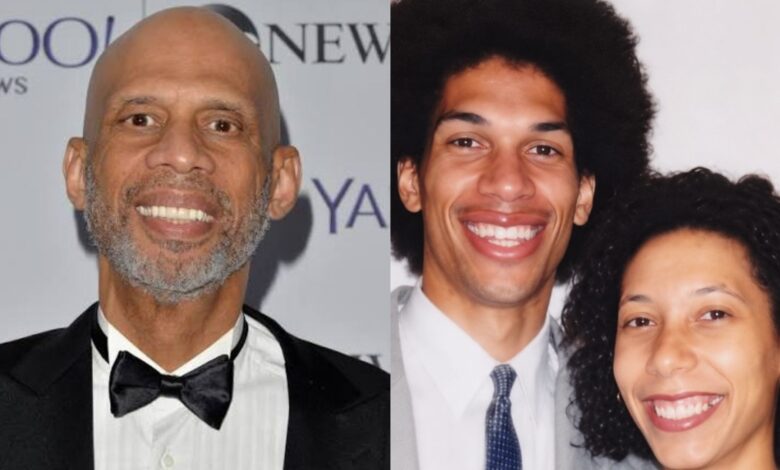
Habiba Abdul Jabbar is best known as the former wife of NBA legend Kareem Abdul-Jabbar, but her story reaches beyond a famous last name. Born Janice Brown in New York City, she later embraced Islam and became known by the name Habiba. Her life became publicly connected to one of basketball’s greatest figures during a time when his fame was rising fast.
She met Kareem Abdul-Jabbar when he was still widely known as Lew Alcindor, the towering basketball star from UCLA. Their relationship moved through love, faith, family, separation, and divorce. While Kareem became a global sports icon, she chose a very different path. She stepped away from the spotlight and kept her life centered on privacy, spirituality, and family.
In this article, we will look at her early life, her name change, her connection to Islam, her marriage to Kareem Abdul-Jabbar, and the children they shared. We will also discuss their separation, divorce, and why her quiet life still interests many readers today. This is a careful look at a woman who lived near fame but did not build her identity around it.
Habiba Abdul Jabbar and Why Her Story Still Gets Attention
Public interest in Habiba Abdul Jabbar comes mainly from her marriage to Kareem Abdul-Jabbar, one of the most respected athletes in American sports history. Kareem’s long career, social voice, and cultural importance made people curious about the women and family members who were part of his private world. Because she was his first wife, her name often appears in searches about his personal history.
Yet her story is not simply about being linked to a famous man. It also reflects a period of identity, religion, and personal change. She entered Kareem’s life when he was moving through major changes of his own. He had already become a basketball star, but he was also shaping his spiritual beliefs and public identity.
Her decision to live privately makes her even more interesting to many readers. In modern celebrity culture, people often expect every family member to speak publicly. She did not follow that path. Her silence has created curiosity, but it also deserves respect.
Habiba Abdul Jabbar’s Early Life as Janice Brown
Before she became known as Habiba, she was born Janice Brown in New York City. Public information about her childhood, parents, education, and early family background remains limited. Unlike many people connected to celebrities, she did not later turn her private history into interviews, books, or public appearances.
That lack of public detail should not be treated as mystery or scandal. Some people simply choose to protect their past, especially when their adult life becomes attached to a famous public figure. Her early life appears to have remained outside the media because she wanted it that way.
What is publicly known is that she came from New York and later entered a life shaped by religion, marriage, and motherhood. Her early name, Janice Brown, is important because it shows the personal change she later made after converting to Islam. That change became one of the defining facts of her public identity.
Habiba Abdul Jabbar’s Conversion to Islam and New Name
Habiba Abdul Jabbar changed her name after converting to Islam. This was not just a small public detail. For many converts, a new name can mark a new spiritual direction, a new sense of belonging, and a deeper personal commitment. In her case, the name Habiba became the one most closely connected to her adult public life.
Her conversion also connected with the spiritual world that surrounded Kareem Abdul-Jabbar at the time. Kareem himself had converted to Islam and changed his name from Lew Alcindor. This shared religious identity became an important part of their relationship and marriage.
Still, not every detail of her religious journey is publicly available. Her private beliefs, personal teachers, and later spiritual practices have not been widely documented. What can be said carefully is that faith played a major role in her identity, her marriage, and the life she chose after public attention faded.
Habiba Abdul Jabbar’s First Meeting With Kareem Abdul-Jabbar
Habiba Abdul Jabbar met Kareem Abdul-Jabbar at a UCLA basketball game. At that time, Kareem was still known by his birth name, Lew Alcindor. He was already a major basketball figure and one of the most dominant players in college sports.
The setting matters because UCLA was central to Kareem’s rise. His college basketball years made him a national name before his professional career reached historic heights. Meeting him in that environment placed her close to the world of sports fame before it became even larger.
Their meeting eventually led to a relationship rooted in both personal attraction and shared religious direction. However, details about their courtship are not widely publicized. There are no confirmed public accounts showing every stage of how their relationship developed. Because of that, it is better to describe the known facts without adding invented romance or drama.
Habiba Abdul Jabbar and the 1971 Muslim Marriage Ceremony
Habiba Abdul Jabbar married Kareem Abdul-Jabbar in a Muslim ceremony in 1971. Their marriage came during a powerful moment in Kareem’s life. He was moving from college fame into professional greatness, and his public identity was changing along with his spiritual identity.
Their wedding reflected their Islamic faith. This detail is important because it shows that religion was not just a background subject in their relationship. It was part of the way they formed their marriage and presented their commitment to each other.
The marriage also happened during a period when Kareem’s name change and faith attracted public attention. For a couple connected to such a famous athlete, private choices could quickly become public conversation. Still, Habiba did not become a celebrity personality. Even as Kareem’s profile grew, she remained much more private.
Habiba Abdul Jabbar as Kareem Abdul-Jabbar’s First Wife
Habiba Abdul Jabbar became Kareem Abdul-Jabbar’s first wife before he became the full global symbol he is today. This made her part of his early adult life, not just his later fame. Their marriage belonged to a time when he was still building the foundation of his professional and personal legacy.
Being married to a rising athlete can bring pressure. Schedules, travel, public attention, and personal expectations often affect relationships. Kareem’s career placed him under constant attention, while his family life remained much less visible. That contrast likely shaped how the public later viewed their marriage.
However, it is important not to claim details that are not publicly confirmed. The exact emotional struggles inside their marriage are not fully available to the public. What is known is that they married in 1971, later separated, and eventually divorced. The rest should be handled with care.
Habiba Abdul Jabbar’s Family Life and Role as a Mother
Habiba Abdul Jabbar and Kareem Abdul-Jabbar had three children together. Their children are named Habiba, Sultana, and Kareem Jr. Motherhood became one of the most important known parts of her life after marriage. While Kareem’s sports career continued in public, she helped raise a family away from constant media attention.
Family life during that period was not simple. Kareem’s career brought fame, travel, and professional demands. For any spouse and mother, that kind of public life can create unusual pressure. The family had to exist between private needs and public interest.
Her children are part of a larger Abdul-Jabbar family story, but she appears to have kept her own role quiet. She did not use motherhood for publicity. Instead, her public image became connected to privacy, dignity, and a family-centered life after divorce.
Habiba Abdul Jabbar and Her Children With Kareem Abdul-Jabbar
The three children from this marriage form the clearest public family link between Habiba and Kareem. Their daughter Habiba is often mentioned as Kareem’s first child. Their daughter Sultana has remained more private. Their son Kareem Jr. later became known for his own connection to basketball.
Kareem Jr. followed sports in a way that naturally drew comparisons to his father. Being the son of a basketball legend can bring both opportunity and pressure. However, he has his own identity and should not be reduced only to his father’s name.
The family’s children show that the marriage had a lasting legacy beyond the divorce. Even after the relationship ended, the parental connection remained part of both their lives. For readers, this is one reason the story still matters.
Habiba Abdul Jabbar’s Separation From Kareem in 1973
Habiba Abdul Jabbar and Kareem Abdul-Jabbar separated in 1973. Their separation came only a few years after their 1971 marriage. This period marked a major change in their family life and began the path toward their later divorce.
The exact private reasons behind the separation are not fully public. Some relationship stories become surrounded by rumors, especially when one person is famous. But responsible writing should avoid turning limited facts into dramatic claims. It is enough to say that the marriage faced serious difficulties and the couple separated.
The separation also shows that their relationship had already changed before the legal divorce became final. For many couples, separation is the emotional ending before the legal paperwork. In their case, the public timeline shows several years between separation and official divorce.
Habiba Abdul Jabbar’s 1978 Divorce and Life Change
Habiba Abdul Jabbar and Kareem Abdul-Jabbar officially divorced in 1978. By then, they had been separated for several years. The divorce formally ended their marriage, but it did not erase their shared history or their connection through their children.
Divorce from a public figure can bring unwanted attention. In her case, she appears to have avoided turning the divorce into a media subject. She did not build a public career from the breakup or speak widely about private matters.
That choice shaped how people remember her. She is not known for interviews, public accusations, or celebrity appearances. She is remembered as a private woman who had once been married to one of basketball’s greatest players and later chose a quieter life.
Habiba Abdul Jabbar’s Private Life After Divorce
After the divorce, Habiba Abdul Jabbar maintained a private life centered on spirituality and family. Public records about her later work, residence, personal relationships, and daily life are limited. That privacy makes it difficult to write a detailed later-life biography without guessing.
Her choice to remain private deserves respect. Not every person connected to a celebrity wants to be part of celebrity culture. Some people prefer a meaningful life outside cameras, headlines, and public commentary.
This privacy also protects her from being defined only by marriage. While many people search her name because of Kareem Abdul-Jabbar, her life after divorce appears to have moved in a quieter direction. She chose faith and family over public visibility.
Habiba Abdul Jabbar and the Challenge of Being Linked to a Legend
Habiba Abdul Jabbar’s name will always appear beside Kareem Abdul-Jabbar in public searches. That can be difficult for any private person. Kareem is not just a former athlete. He is a cultural figure, author, activist, and one of the most honored basketball players in history.
When someone is linked to a person of that size, the public often sees them through a narrow lens. They become “the ex-wife” or “the former spouse,” even if their own life includes many private experiences that never become public. This is why her story requires a careful tone.
She should not be described as a footnote. She was part of Kareem’s life during an important period, and she became the mother of three of his children. At the same time, her privacy means that many personal details remain not publicly available.
Habiba Abdul Jabbar’s Spiritual Identity and Quiet Strength
Habiba Abdul Jabbar’s spiritual identity remains one of the strongest themes in her public story. Her conversion to Islam and name change show a meaningful personal decision. Her later private life also appears closely connected to spirituality.
Quiet strength can be harder to describe than public achievement. It does not always come with awards, interviews, or headlines. Sometimes it appears through the decision to step back, raise a family, protect personal values, and avoid unnecessary attention.
Her story shows a different kind of public relevance. She did not seek fame, but her life touched a famous legacy. She did not compete for attention, but readers still want to know who she was and what role she played. That balance makes her story human.
Habiba Abdul Jabbar’s Public Image and What Is Not Confirmed
Habiba Abdul Jabbar has a limited public image because she has not shared much about herself in mainstream media. Her birth name, conversion, marriage, children, separation, and divorce are the main confirmed parts of her biography. Many other personal details are not publicly confirmed.
Her exact birthday, education, career path, parents, current residence, and net worth are not publicly available. Any article that claims exact details without proof should be treated carefully. A responsible biography should not invent information just to fill space.
This matters because private people often become targets for low-quality claims. When a person does not speak publicly, others may try to fill the silence with guesses. Her story should be written with restraint, especially because she has chosen a life away from public performance.
Habiba Abdul Jabbar’s Place in Kareem Abdul-Jabbar’s Family Story
Habiba Abdul Jabbar holds an important place in Kareem Abdul-Jabbar’s family history. She was his first wife and the mother of his first three children. That role connects her to the personal side of a man widely known for sports greatness.
Kareem’s public life includes records, championships, activism, writing, and cultural honors. But behind every public figure is a private family story. Her part of that story belongs to the early years, when his life was changing quickly and his identity was becoming more defined.
Still, her role should not be exaggerated beyond the facts. She was not a public manager of his career or a celebrity partner seeking attention. Her known importance comes through marriage, family, faith, and the private dignity she carried after the relationship ended.
Habiba Abdul Jabbar’s Legacy of Privacy, Faith, and Family
Habiba Abdul Jabbar’s legacy is quiet, but it is not empty. She represents a woman who entered public awareness through marriage but did not allow fame to become her full identity. Her story includes faith, motherhood, separation, divorce, and a long commitment to privacy.
That kind of life can be difficult to explain in a culture that rewards visibility. People often measure importance by public appearances, social media activity, and interviews. She offers a different example. She shows that a person can remain meaningful even without constant public exposure.
Her story also reminds readers to separate curiosity from entitlement. It is natural to want to understand the people around major figures. But it is also important to accept when details are not publicly available. In her case, the silence seems intentional, and that choice deserves dignity.
Final Thoughts on Habiba Abdul Jabbar
Habiba Abdul Jabbar is remembered mainly through her connection to Kareem Abdul-Jabbar, but her story deserves a more careful reading. She was born Janice Brown in New York City, converted to Islam, married Kareem in 1971, had three children with him, separated in 1973, and officially divorced in 1978.
Her life after divorce did not become a celebrity storyline. She chose privacy, spirituality, and family over media attention. That choice has left many details unknown, but it also gives her public story a quiet strength.
In the end, she remains an important figure in Kareem Abdul-Jabbar’s personal history. She was part of his early adult life, shared a faith-centered marriage with him, and became the mother of three of his children. Her story is not loud, but it is still worth telling with respect.
Who is Habiba Abdul Jabbar?
Habiba Abdul Jabbar is the former wife of NBA legend Kareem Abdul-Jabbar. She was born Janice Brown in New York City and later converted to Islam.
What was Habiba Abdul Jabbar’s birth name?
Her birth name was Janice Brown. She changed her name to Habiba after converting to Islam, which became part of her public identity.
When did Habiba Abdul Jabbar marry Kareem Abdul-Jabbar?
She married Kareem Abdul-Jabbar in a Muslim ceremony in 1971. At the time, Kareem was still strongly connected to his earlier public identity as Lew Alcindor.
How many children did Habiba Abdul Jabbar have with Kareem?
She had three children with Kareem Abdul-Jabbar. Their children are Habiba, Sultana, and Kareem Jr.
Where is Habiba Abdul Jabbar now?
Her current life is private, and details about her residence or daily activities are not publicly available. She has largely stayed away from public attention.