

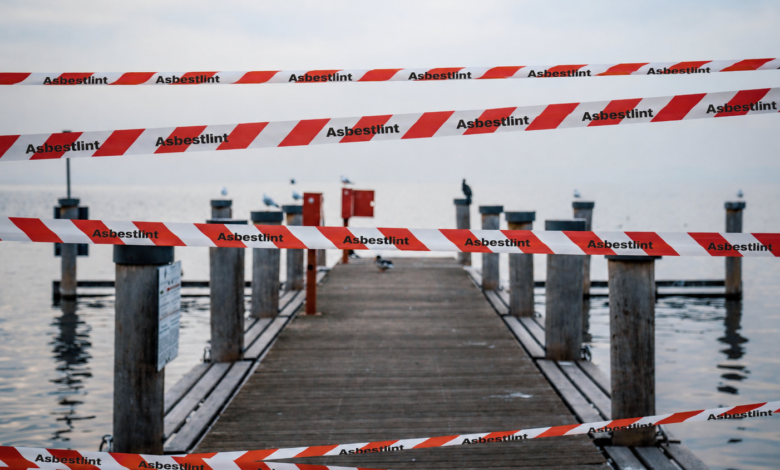
Asbestlint is a form of polyethylene barrier tape used to mark, divide, or seal work areas. In many building and cleanup settings, the term refers to non-adhesive tape placed around a controlled zone. Workers may use it near demolition work, repair sites, closed rooms, or areas that need clear limits. Similar polyethylene tapes also come with strong adhesive for sealing plastic sheets and moisture barriers.
The name can cause some confusion. Some websites use “asbestlint” for asbestos dust or old asbestos-based tape. In parts of Europe, related words can also mean printed asbestos warning tape. This guide uses the modern construction meaning: plastic barrier tape used for warning, access control, and barrier work.
What Is Asbestlint?
Asbestlint is usually a thin ribbon made from polyethylene, or PE. This common plastic is light, flexible, and resistant to water. It can also handle many outdoor conditions better than paper-based warning products.
Most non-adhesive rolls do not stick to a surface. A worker pulls the ribbon from the roll and ties, staples, nails, clips, or wraps it around posts and fixed points. The tape forms a visible line around the selected area.
Bright colors help people see the boundary from a distance. Yellow and black often signal caution. Red, white, or printed danger tape may mark a more serious risk. Text may include words such as “CAUTION,” “DANGER,” “KEEP OUT,” or a warning linked to asbestos work.
The tape does not create a hard wall. It acts as a visual control. People must still follow signs, site rules, and directions from trained staff.
Why the Term Can Be Misleading
The word asbestlint does not have one fixed meaning in every country or industry. “Asbest” is the Dutch and German word for asbestos. “Lint” can mean ribbon or tape in Dutch.
For that reason, a European product called asbestlint may be a roll of printed ribbon used to close off an asbestos work area. One Dutch supplier, for example, sells yellow-and-black LDPE warning ribbon printed for asbestos hazards. The listed roll is 5 centimeters wide and 500 meters long.
Other online pages use the same term for asbestos dust or historical asbestos cloth tape. Those meanings are very different. Buyers should always read the product label, material details, thickness, adhesive type, and intended use.
Modern polyethylene barrier tape does not become asbestos merely because it is called asbestlint. Still, tape used near asbestos removal must be part of a much larger safety system.
The Two Main Types of Barrier Tape
The easiest way to understand this product is to place it in one of two groups.
The first group is non-adhesive barricade tape. It marks a line or blocks normal entry. It may be used for construction, maintenance, crowd control, repair work, or a controlled cleanup zone.
The second group is adhesive polyethylene tape. This product seals seams, holes, edges, and overlaps in heavy plastic sheeting. It may be used with crawl-space liners, vapor barriers, insulation systems, temporary walls, or containment sheets.
Both types may be made from polyethylene. But they do different jobs. One warns people. The other forms a seal.
Non-Adhesive Asbestlint for Barricades
Non-adhesive asbestlint is the type most people picture when they hear “barrier tape.” It comes as a long plastic ribbon wrapped around a core.
Common rolls are about 2 mil to 4 mil thick. A mil is one-thousandth of an inch. A 4-mil tape is thicker and often stronger than a basic 2-mil roll. Widths near three inches are common, though other sizes are sold.
Thin tape works well for short jobs inside a building. It is light, cheap, and fast to place. Thicker tape may be a better choice outside, where wind and rough contact can tear weak ribbon.
This tape can be tied between cones, fence posts, poles, doors, rails, or temporary stands. Some crews also staple or nail it to wood. Care is needed because a small hole can become a tear point in strong wind.
Adhesive Tape for Vapor Barriers
Adhesive polyethylene tape is much heavier. Many products are around 9 mil thick and include a strong synthetic rubber adhesive.
This form of asbestlint does not hang between posts. It sticks to plastic sheets and seals their edges. Workers may use it to join sections of polyethylene liner in a crawl space. It can also cover cuts, close seams, and attach sheeting around a repair area.
A good vapor-barrier tape needs more than strong initial grip. It should stay bonded when the space becomes damp, hot, cold, or dirty. Some products also include protection from ultraviolet light for short-term outdoor use.
The surface must still be prepared. Dust, oil, moisture, wrinkles, and loose material can weaken the bond. Tape should be pressed down with firm and even force. Large wrinkles can form air paths, even when the tape looks sealed.
Common Uses in Construction
Contractors may use asbestlint during demolition, remodeling, painting, roofing, electrical work, plumbing repairs, or floor replacement.
A non-adhesive roll can close a hallway while work is underway. It can mark an open trench, wet floor, damaged stair, exposed cable, or area below overhead work. It can also guide people away from equipment routes.
Adhesive tape supports moisture-control work. It joins plastic ground liners, seals wall sheets, and repairs small holes in temporary barriers. It may also hold protective film in place during a limited project.
The correct tape depends on the task. A bright warning ribbon cannot seal moisture. A white adhesive seam tape may create a good joint but may not give people a clear warning from across a room.
How Asbestlint Supports Remediation Work
During remediation, workers often need to separate a clean area from a controlled work zone. Non-adhesive asbestlint can help show where normal entry ends.
The tape may be placed outside a room, around a waste route, near a decontamination unit, or along the edge of a restricted section. Printed wording gives workers and visitors more context than plain plastic ribbon.
Adhesive tape may support temporary polyethylene walls or floor covers. It can seal sheet overlaps and help reduce gaps around the containment system.
But barrier tape alone does not control asbestos fibers. Proper asbestos work may require trained staff, regulated work methods, respiratory protection, air control, sealed waste handling, warning signs, and legal clearance steps. Rules differ by location and project type.
Understanding Safety Colors
Color helps people make a fast choice. OSHA states that yellow is the basic color used to mark caution and physical hazards such as falling, tripping, striking, or getting caught between objects.
Red is linked with certain danger, stop, fire, and emergency uses under workplace safety rules. Yet tape color systems can vary by site, company, and hazard class.
This means a crew should not pick asbestlint based only on appearance. The wording, placement, site plan, and local rules matter as well.
OSHA also requires accident-prevention tags where workers face hazards that are unusual, unexpected, or not easy to see. These tags remain in use until the hazard has ended or stronger protection is in place.
A tape line can support that warning system. It should not replace a required guardrail, locked door, machine guard, or sealed containment wall.
Thickness and Strength
Thickness affects how asbestlint performs.
A basic 2-mil roll is easy to carry and place. It suits indoor maintenance, event control, and short jobs. It may tear faster when pulled tight or used in cold and windy weather.
A 3-mil or 4-mil tape gives more strength. It may hold up better around busy work zones and rough outdoor surfaces. It can also be easier to reuse when workers take it down with care.
Adhesive barrier tape is often much thicker. A 9-mil product has a strong film and adhesive layer. The extra body helps it bridge sheet seams and resist punctures.
Thickness is not the only measure of quality. Film grade, stretch, printing, adhesive type, temperature range, and UV resistance can all change performance.
Weather and Outdoor Use
Polyethylene handles moisture well, which is one reason it is widely used for film, liners, and barriers. It does not soak up rain like paper tape.
Still, no roll lasts forever. Sunlight can fade printed text and weaken plastic. Wind can twist the ribbon until it becomes hard to read. Sharp corners can cut it. Cold weather may make some film feel less flexible.
Outdoor asbestlint should be checked during each shift. Loose tape should be tied again or replaced. A faded warning may no longer give clear notice.
For long outdoor jobs, buyers should look for UV-resistant film and thicker material. Strong posts and good spacing also reduce sagging and wind damage.
How to Pick the Right Product
Start with the job, not the price.
Choose non-adhesive tape when the main goal is to warn people or mark a boundary. Pick a clear message that matches the risk. Use a color that can be seen against the walls, floor, ground, or sky behind it.
Choose adhesive tape when the goal is to join plastic sheets. Check the liner material, tape width, temperature range, moisture resistance, and surface needs.
A wide tape may cover uneven overlaps better than a narrow strip. Four-inch seam tape is common in crawl-space work because it gives more room on both sides of the joint.
Also check the roll length. A low-cost roll may seem like a bargain but can create waste when many short pieces are needed. Measure the work zone and add extra material for overlaps, knots, repairs, and damaged sections.
Correct Use of Non-Adhesive Tape
Place asbestlint at a height that people can see. In many cases, waist to chest height works well. A second lower line may help near holes, steps, or low hazards.
Do not stretch the ribbon until it is close to breaking. Leave enough slack for small moves in the posts. At the same time, avoid deep sagging that lets people step over it with ease.
Use several fixed points on long runs. A tape line tied only at both ends may move too much in wind.
Add signs at normal entry points. State the hazard when possible. “Danger” is less useful than “Danger: Open Excavation” or “Authorized Workers Only.”
Remove the tape once the hazard ends. Old tape left in place can train people to ignore future warnings.
Correct Use of Adhesive Barrier Tape
Clean and dry the surface before placing adhesive asbestlint. Wipe away dust and loose dirt. Let damp plastic dry when the product needs a dry bond.
Lay the sheets flat. Overlap them by the amount required for the system. Place the tape over the center of the seam so both sides receive a similar bond area.
Press from one end to the other. This pushes out trapped air and reduces folds. A small hand roller can help on long seams.
Corners need extra care. Instead of forcing one piece around a sharp turn, use shorter strips that lie flat. Patch holes with enough tape to extend past every damaged edge.
Check the joint after installation. A seam that lifts within a few minutes may fail later. Replace weak sections rather than pressing the same dirty adhesive back down.
Common Mistakes to Avoid
One common mistake is using warning tape as a physical guard. Asbestlint may tell people to stop, but it cannot prevent a fall into a deep hole or block a moving machine.
Another mistake is using barricade ribbon to seal sheeting. It has no adhesive and cannot make an airtight or moisture-resistant seam.
Some users also select tape by color alone. A yellow roll may not carry the wording required by the site plan. A red roll may be too strong a warning for a low-level caution area, depending on the system in use.
Poor placement is another issue. Tape hidden behind equipment, doors, parked vehicles, or stored material gives little protection.
And in asbestos work, the largest mistake is treating tape as the main safety control. It is only one visible part of a controlled process.
Storage and Disposal
Keep unused asbestlint in a dry place away from high heat and direct sun. Store rolls flat or on their cores so they do not become crushed.
Adhesive rolls should remain wrapped until needed. Dirt on the side of the roll can move onto the adhesive edge and weaken the seal.
Clean barricade tape may be reused if it still has clear print and good strength. Damaged or faded tape should be removed from service.
Tape used in a contaminated work zone may need special handling. Do not assume it can go into normal trash. Follow the site waste plan and local rules. Material exposed to asbestos dust may need to be sealed, labeled, and handled with the rest of the regulated waste.
Is Asbestlint the Same as Asbestos Tape?
No. Modern polyethylene asbestlint is not the same as old asbestos textile tape.
Historical asbestos tape was made with asbestos fibers because the material could resist high heat. It was used around pipes, boilers, furnaces, ducts, and industrial equipment. Such material can release dangerous fibers when it becomes worn or disturbed.
Polyethylene barrier tape is plastic. It is used for marking or sealing. It is not designed as high-heat insulation.
When an unknown old wrap is found on a pipe or heating system, do not identify it by sight alone. Avoid cutting, tearing, sanding, or pulling it. A qualified asbestos professional can inspect or test the material.
Final Thoughts
Asbestlint is a simple product, but its job matters. Non-adhesive polyethylene tape marks work zones and warns people about danger. Adhesive polyethylene tape seals plastic sheets used for moisture control and temporary barriers.
The two forms should not be mixed up. Warning ribbon creates a visible boundary. Seam tape creates a bonded joint.
For normal construction work, choose the right color, wording, thickness, and roll length. Place the tape where people can see it. Inspect it during the job and remove it when the risk has ended.
For asbestos remediation, use it only as part of a full safety plan. Tape can mark a controlled zone or support plastic sheeting. It cannot replace training, containment, air controls, protective gear, required signs, or professional supervision.