

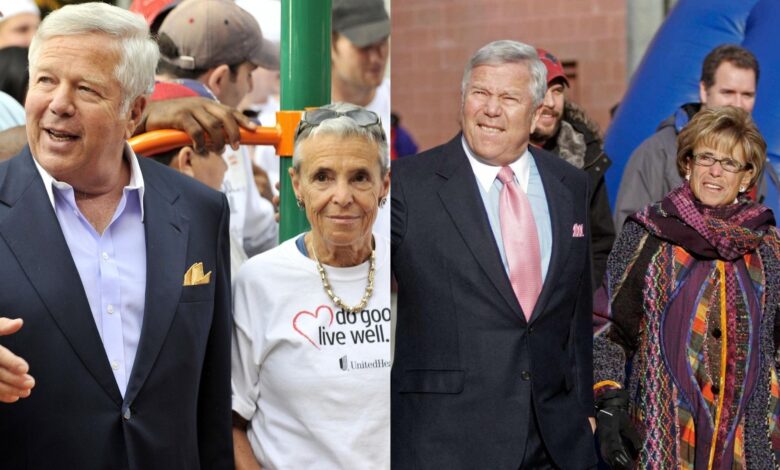
Myra Kraft was an American philanthropist, community leader, and the beloved wife of New England Patriots owner Robert Kraft. She became widely respected not only because of her connection to one of the most successful families in professional sports, but because of the way she built a deeply meaningful life around service, generosity, and human connection. In Boston, in Jewish community circles, and across many charitable institutions, she was known as a woman who worked with purpose and heart.
Quick Bio
| Field | Details |
|---|---|
| Full Name | Myra Nathalie Hiatt Kraft |
| Known As | Myra Kraft |
| Birth Date | December 27, 1942 |
| Death Date | July 20, 2011 |
| Age at Death | 68 years old |
| Birthplace | Worcester, Massachusetts, United States |
| Nationality | American |
| Ethnicity | Jewish-American |
| Religion | Judaism |
| Father | Jacob Hiatt |
| Mother | Frances Hiatt |
| Education | Brandeis University |
| Profession | Philanthropist, charity leader, community advocate |
| Famous As | Wife of New England Patriots owner Robert Kraft |
| Marital Status | Married |
| Husband | Robert Kraft |
| Marriage Year | 1963 |
| Children | Jonathan, Daniel, Joshua, and David Kraft |
| Grandchildren | Eight |
| Estimated Height | Around 5 feet 2 inches |
| Estimated Weight | Around 98 pounds |
| Estimated Net Worth | Estimated at $700 million to $750 million as a family-linked wealth figure |
| Known For | Philanthropy, community leadership, Patriots charitable work |
| Cause of Death | Ovarian cancer |
Early Life and Family Roots of Myra Kraft
Myra Kraft was born Myra Nathalie Hiatt on December 27, 1942, in Worcester, Massachusetts. She came from a family with strong values, deep Jewish roots, and a clear tradition of giving back. Her father, Jacob Hiatt, was a respected industrialist and philanthropist who played an important role in business and community leadership. Her mother, Frances Hiatt, was also part of a family culture that valued education, faith, and public responsibility.
Growing up in this environment helped shape her worldview from an early age. She learned that privilege carried responsibility and that a meaningful life was tied to what a person contributed to others. Those lessons would later define her public and private identity. Her upbringing gave her both confidence and compassion, two qualities that stayed central throughout her adult life.
Her family background also added depth to her future role in charitable work. She did not step into philanthropy as a trend or a social image. She grew up with it. That early exposure laid the foundation for the thoughtful and hands-on leader she would become later in life.
Education and Meeting Robert Kraft
Education played an important role in her development. She attended Brandeis University, where she studied history and built the intellectual and personal foundation that would guide her adult years. Brandeis also became important for another reason. It was where she met Robert Kraft, the man she would marry and spend the rest of her life with.
Their relationship began during their young adult years, long before the Kraft family became one of the best-known names in American sports and business. This makes their story especially compelling. Their bond was formed during a simpler stage of life, before massive public recognition and before the New England Patriots became a dynasty.
The connection between them was built on shared values, family focus, and long-term commitment. That bond remained central to their story for decades. For many readers, this part of the biography reveals the emotional core behind the public image. The story of Myra Kraft is not only about charity and legacy. It is also about partnership, loyalty, and growing through life together.
Myra Kraft’s Marriage and Family Life
She married Robert Kraft in 1963, beginning a marriage that lasted until her death in 2011. Over the years, the couple built a strong family and welcomed four sons: Jonathan, Daniel, Joshua, and David. Family life was always one of her defining priorities, and those close to the Kraft family often described her as a steady, loving, and deeply involved matriarch.
Even as the family’s public profile rose, she remained committed to the home and to the values she wanted to pass on to her children. She believed in raising grounded, responsible sons who understood the importance of service, humility, and hard work. That approach helped shape a family culture that blended business leadership with charitable commitment.
Her role within the household was not secondary to her public work. It was part of the same mission. The values she promoted at home matched the values she championed in the wider world. That is why her family tree remains an important part of her story. It reflects not just relatives and relationships, but the legacy of principles she worked hard to preserve.
Myra Kraft’s Role as Robert Kraft’s Wife
Writing about her as the wife of New England Patriots owner Robert Kraft means understanding the full importance of that role. She was not simply a supportive spouse standing in the background. She was a trusted partner whose judgment, compassion, and strength helped define the family’s public identity. In many ways, she helped shape the culture around the Kraft name.
As the Patriots organization grew in stature, she brought a human element to the family’s public presence. Her interest in fairness, women’s advocacy, and community well-being influenced how the family approached leadership. She cared deeply about ethics, standards, and public responsibility. Her values mattered in real decisions and public conversations.
This role made Myra Kraft unique. She represented grace without distance. She could move in high-profile spaces while still remaining deeply connected to ordinary people and practical community needs. That ability made her admired not only within football circles, but also in the broader charitable world.
Lifestyle and Personal Values
When people search for lifestyle details, they often expect glamour, luxury, and public visibility. In her case, the more meaningful story is about disciplined values, personal warmth, and elegant simplicity. She lived in a wealthy and highly visible family, but her identity was never driven by excess. Her lifestyle reflected purpose, routine, and personal commitment rather than empty display.
She was known for being physically active and health-conscious, and she maintained a polished but understated image. Those who followed the Kraft family often viewed her as petite, refined, and composed. Her appearance matched her reputation: calm, graceful, and organized. Yet the real strength of her lifestyle was in how she balanced family, charity work, and public demands with remarkable steadiness.
In today’s digital world, many public figures build influence through social media presence. That was not her path. She belonged to a generation that built reputation through real-world action, face-to-face relationships, and institutional leadership. That gives her life story a timeless quality. Her influence did not rely on screens. It relied on substance.
Philanthropic Vision and Purpose
Myra Kraft earned deep respect because she treated philanthropy as active responsibility, not passive donation. She helped guide major charitable efforts through the Robert and Myra Kraft Family Foundation and other organizations, but her impact came from more than money. She believed in engaged giving, where leaders showed up, listened, and stayed committed to long-term change.
Her charitable vision touched education, healthcare, Jewish causes, women’s issues, and youth development. She supported organizations that improved opportunity and dignity for others. Rather than choosing visibility for its own sake, she focused on institutions and programs that created lasting value. That is a key reason her legacy remains strong.
This approach also defined her version of success. For her, success was not just about wealth or recognition. It was about using resources wisely and leaving communities stronger than they were before. That idea still resonates with readers who want more than a standard celebrity biography.
Leadership in Major Charities
One of the strongest parts of her biography is her record of leadership. She served in important roles with the United Way of Massachusetts Bay, Brandeis University, and Jewish community initiatives. She also became the first woman to chair the board of the Boys & Girls Clubs of Boston, a milestone that reflected both her credibility and her commitment.
These roles were significant because they showed that she was trusted at the highest level. People did not invite her into leadership because of her last name alone. They recognized her judgment, energy, and ability to help organizations grow. She was respected as someone who could support missions while also improving how institutions worked.
This is where Myra Kraft stands apart from many society figures. Her work was not symbolic. It was operational, thoughtful, and sustained. She led, advised, encouraged, and helped fund. That combination made her one of the most admired philanthropic figures in Boston and beyond.
Work With the Patriots Charitable Foundation
Her connection to the New England Patriots also became an important part of her charitable identity. She served as president of the New England Patriots Charitable Foundation and helped connect the team’s platform to meaningful community outreach. This role blended sports, service, and public trust in a way that reflected her broader values.
Through this work, she helped extend the Patriots brand beyond wins and championships. She reminded people that a successful organization should also contribute to the lives of others. Her approach gave the franchise a more compassionate public image and made the team’s community work feel authentic.
After her passing, the Patriots honored her memory with MHK patches on their uniforms during the 2011 season. That tribute carried emotional power because it recognized how deeply she mattered to the organization. It was not just a gesture of family grief. It was a public sign of the respect she had earned.
Influence on Women, Community, and Public Service
Her life also carried special meaning for women in leadership and service. She showed that a woman could hold influence with dignity, seriousness, and conviction without needing to chase fame. She moved through male-dominated business and sports circles while remaining true to her own voice and priorities.
That made her a strong example for women interested in nonprofit leadership, civic service, and family-centered public life. She proved that compassion and authority could work together. She also demonstrated that behind many major institutions are women whose vision shapes culture in lasting ways.
In Boston and beyond, people admired her because she was approachable as well as accomplished. She did not seem distant. She seemed real. That combination of warmth and leadership helped define her public image and made her success story especially inspiring.
Myra Kraft Family Tree and Children
The family tree of Myra Kraft begins with her parents, Jacob and Frances Hiatt, and extends through the family she built with Robert Kraft. Their four sons became central parts of the Kraft family legacy. Jonathan Kraft went on to play a major role in the family business and Patriots leadership. Daniel Kraft became known for his work in international business. Joshua Kraft built a strong reputation in charitable and civic work. David Kraft remained part of the wider family story as well.
This branch of the family tree reveals how values can pass through generations. The family became known not only for wealth and sports ownership, but also for charitable engagement and civic responsibility. That ongoing connection between family and philanthropy was one of her greatest achievements.
For readers interested in family life, this part of the story is important because it shows the private side of her legacy. She was not only a public philanthropist. She was also a mother and grandmother whose influence continued through the lives of her children and grandchildren.
What Is Myra Kraft’s Net Worth?
When discussing net worth, it is important to note that there was no officially published personal figure for Myra Kraft alone. However, because she was the longtime wife and philanthropic partner of Robert Kraft, a practical biography estimate places her financial standing in the $700 million to $750 million range as a family-linked wealth figure around 2011.
This estimate is based on Forbes reporting that Robert Kraft’s net worth was $1.5 billion in 2011, the same year she passed away. Since public sources did not separate her individual assets from the wider Kraft family fortune, this number should be presented as an informed estimate rather than a confirmed personal statement of wealth.
The larger financial story, though, is not just about how much money she was connected to. It is about how that wealth supported charitable missions, family foundations, community projects, healthcare causes, and educational programs. In that sense, her net worth mattered less as a personal label and more as a reflection of the scale of the impact she helped create.
Physical Appearances of Myra Kraft
Public interest in physical details is common, though official measurements for her were never widely confirmed. Based on descriptions and photographs, her estimated height is often placed around 5 feet 2 inches, with an estimated weight of around 98 pounds. These figures should always be described as estimates.
Her public image, however, was about much more than appearance. She was often described as petite, elegant, and graceful, but what truly stood out was her presence. She carried herself with confidence and kindness. Her style was polished without being flashy, and that matched the deeper themes of her life.
That image made a lasting impression because it reflected authenticity. She did not need dramatic reinvention or celebrity branding. Her reputation was built on consistency, dignity, and action. That kind of image ages well because it is connected to character rather than trend.
Her Lasting Legacy After Her Passing
Myra Kraft died on July 20, 2011, after battling ovarian cancer. She was 68 years old. Her passing was deeply felt across the Patriots organization, the Boston community, and the many charitable institutions she had supported. The response to her death made it clear that she had touched lives far beyond her family circle.
Her legacy did not end with memorial statements. It continued through ongoing charitable work and honors created in her name. The Myra Kraft Community MVP Awards became a lasting tribute that celebrates volunteers and strengthens nonprofits, carrying forward the spirit of service she believed in.
This enduring legacy is the clearest proof of her impact. Many people are remembered for wealth or status. She is remembered for generosity, leadership, and human care. That is what gives her story lasting value.
Final Thoughts
The life of Myra Kraft offers a powerful example of what it means to combine family devotion, charitable vision, and quiet strength. As the wife of New England Patriots owner Robert Kraft, she lived close to great wealth and public visibility, yet she built her reputation through service and substance. Her story is not just about marriage into a famous family. It is about what she did with the opportunities and responsibilities that came with that life.
Her lifestyle, family tree, and estimated net worth all attract attention, but the heart of her biography is her humanitarian work and the values she lived by. She remains an inspiring figure because she proved that real success can be measured by compassion, leadership, and legacy. For readers looking to understand the woman behind the Kraft name, her life tells a meaningful and memorable story.
FAQs
Who was Myra Kraft?
Myra Kraft was an American philanthropist and community leader best known as the wife of New England Patriots owner Robert Kraft. She was widely respected for her charitable leadership and devotion to education, healthcare, and Jewish causes.
What was Myra Kraft’s age when she died?
She was 68 years old when she passed away on July 20, 2011. She was born on December 27, 1942.
What was Myra Kraft’s estimated net worth?
There was no officially published personal figure for her separate from the broader Kraft family fortune. Her estimated personal financial position is generally discussed in the multi-million-dollar range, while her family was connected to much larger business wealth.
Who are Myra Kraft’s children?
She had four sons with Robert Kraft: Jonathan, Daniel, Joshua, and David Kraft. Her family remained one of the most important parts of her life and legacy.
What is Myra Kraft remembered for?
She is remembered for her major charitable work, leadership in nonprofit organizations, and lasting impact on the Boston community, Jewish causes, and the New England Patriots’ charitable efforts.